
Tech stocks came under serious selling pressure on Friday with the market concerned about Oracle’s (ORCL) debt issuance and general AI capital expenditures.
With those risk factors in play, it might be worth looking for some bearish option trade ideas.
One way to use options to profit from declining stock prices is via a bear call spread.
A bear call spread is a type of vertical spread, meaning that two options within the same expiry month are being traded.
One call option is being sold, which generates a credit for the trader. Another call option is bought to provide protection against an adverse move.
The sold call is always closer to the stock price than the bought call.
As the name suggests, this trade does best when the stock declines after the trade is open.
However, there can be many cases where this trade can make a profit if the stock stays flat and even if it rises slightly.
Bear call spreads are risk defined trades, there are no naked options here, so they can be traded in retirement accounts such as an IRA.
Traders should have a bearish outlook on the stock and ideally look to enter when the stock has a high implied volatility rank.
Let’s take a look at Barchart’s Bear Call Spread Screener for December 15th:
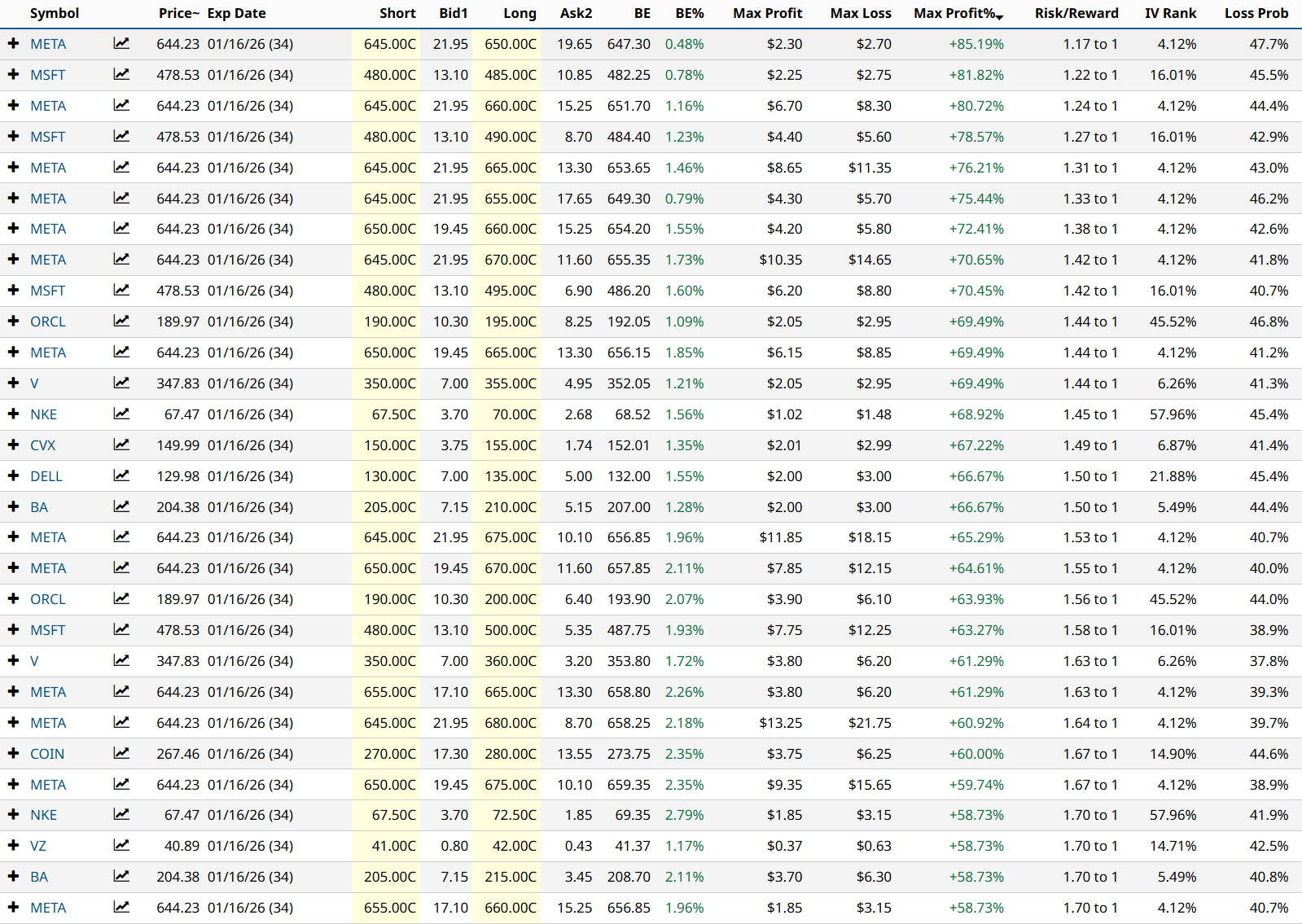
As you can see, the screener shows some interesting Bear Call Spread trades on stocks such as META, MSFT, ORCL, NKE, CVX and DELL.
Below are the full parameters for this scan:
- Opinion Rating: Sell greater than 1%
- Days to expiration: 15 to 60 days
- Monthly Expirations
- Security Type: Stock
- Volume Leg 1: 100
- Open Interest Leg 1: 500
- Moneyness Leg 1: -10.00% to 0.00%
- Volume Leg 2: 100
- Open Interest Leg 2: 500
- Ask Price Leg 2: Greater than 0.20
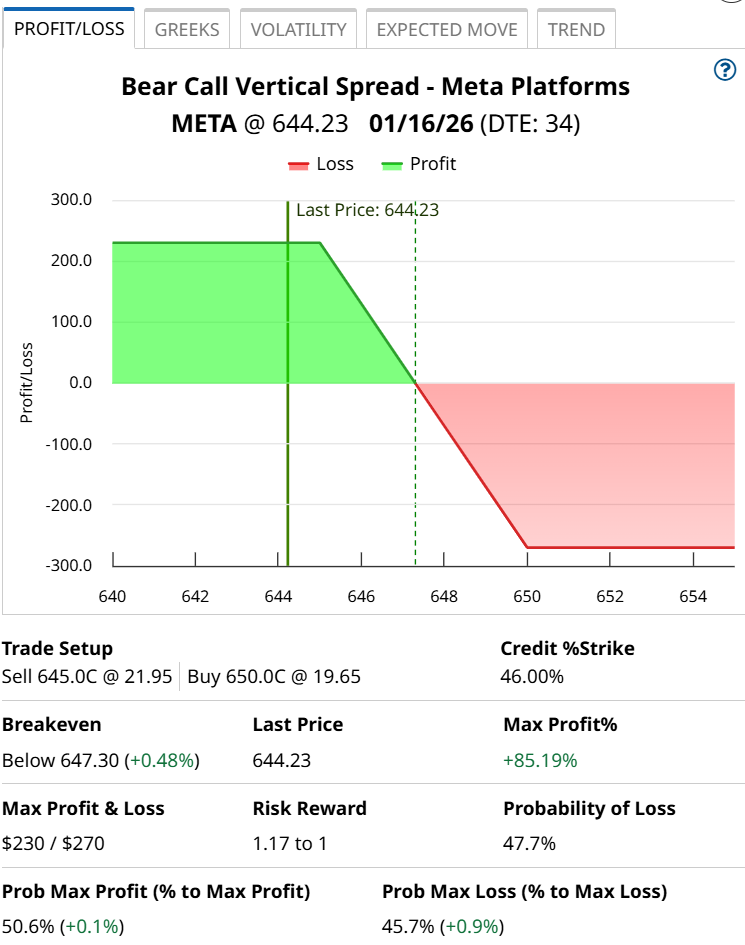
Let’s look at the first line item – a Bear Call Spread on Meta Platforms stock.
Using the January 16 expiry, the trade would involve selling the $645 call and buying the $650 call.
That spread could be sold for around $2.30 which means the trader would receive $230 into their account. The maximum risk is $270 for a total profit potential of 85.19%% with a loss probability of just 47.5%.
The breakeven price is $647.30. This can be calculated by taking the short call strike and adding the premium received.
As the spread is $5 wide, the maximum risk in the trade is 5 – 2.30 x 100 = $270.
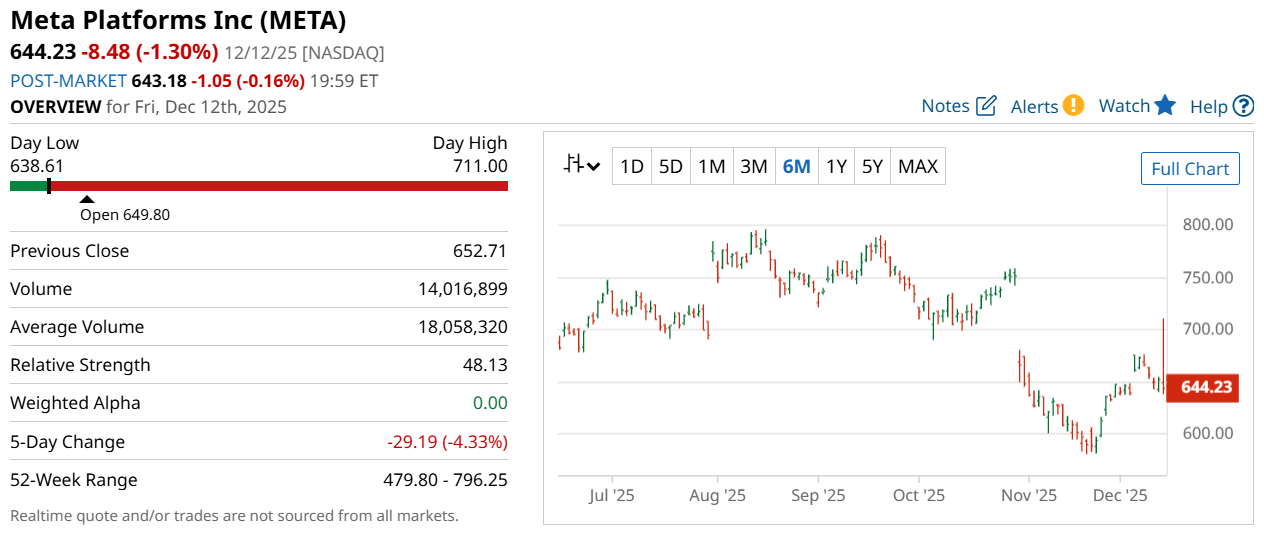
The Barchart Technical Opinion rating is a 64% Sell with a Strengthening short term outlook on maintaining the current direction.
Relative Strength just crossed below 50%. The market is indicating support for a bearish trend.
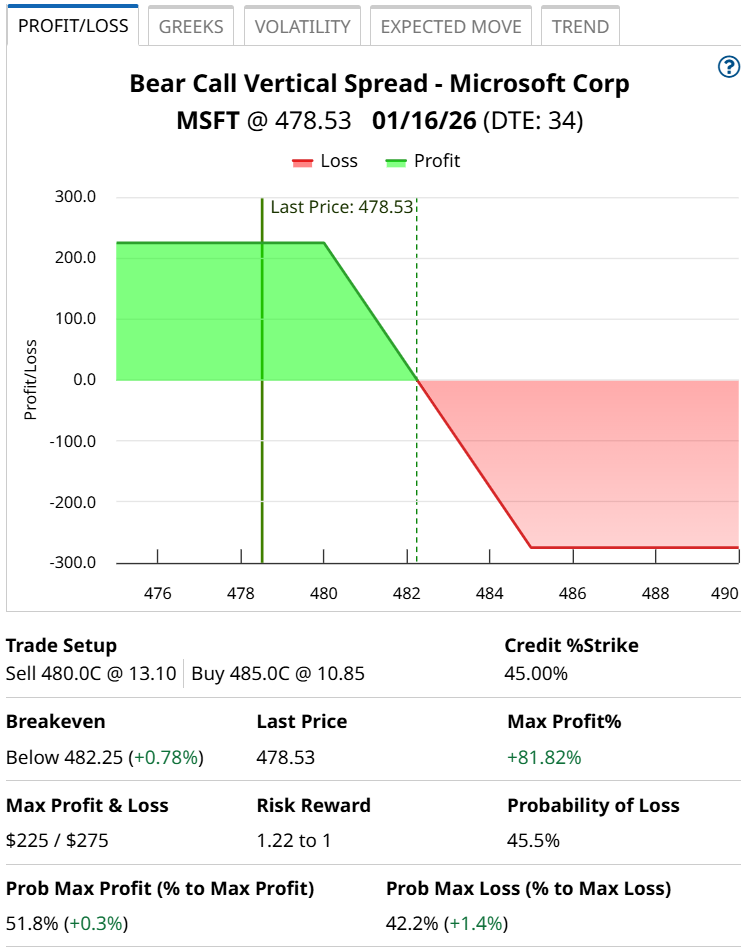
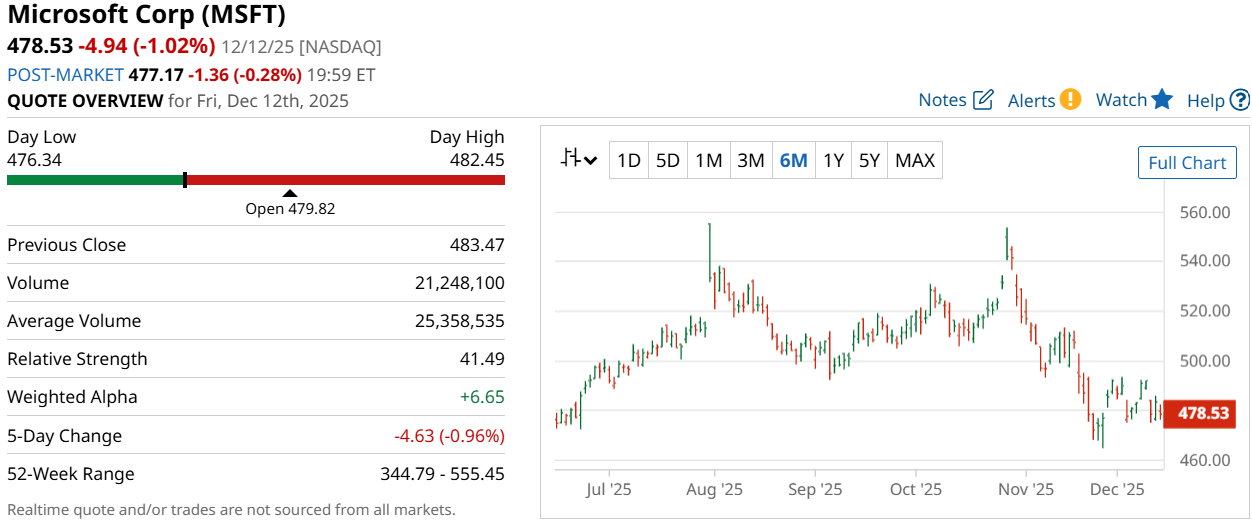
Let’s analyze another trade – a Bear Call Spread on Microsoft.
This Bear Call Spread on MSFT stock involves selling the $480-strike January call and buying the $485-strike call.
That spread could be sold for around $2.25 which means the trader would receive $225into their account. The maximum risk is $275 for a total profit potential of 81.82% with a loss probability of 45.5%.
The breakeven price is $482.25.
The Barchart Technical Opinion rating is a 24% Sell with a Average short term outlook on maintaining the current direction.
Mitigating Risk
Thankfully, Bear Call Spreads are risk defined trades, so they have some build in risk management. The most the META example can lose is $270 and the maximum loss on the MSFT trade is $270.
Position sizing is important so that a 100% loss does not cause more than a 1-2% loss in total portfolio value.
Bear Call Spreads can also contain early assignment risk, so be mindful of that if the stock breaks through the short strike and it’s getting close to expiry.
Please remember that options are risky, and investors can lose 100% of their investment.
This article is for education purposes only and not a trade recommendation. Remember to always do your own due diligence and consult your financial advisor before making any investment decisions.
On the date of publication, Gavin McMaster did not have (either directly or indirectly) positions in any of the securities mentioned in this article. All information and data in this article is solely for informational purposes. For more information please view the Barchart Disclosure Policy here.
More news from Barchart